Parents often ask us:
“When should my child first be assessed for orthodontics?”
Many people associate orthodontics with teenagers and braces. But the development of the teeth, jaws and bite begins much earlier.
At Tooth Sparkler Family Dental, orthodontic assessment is part of the bigger picture of looking after a child’s oral health as they grow.
Regular preventive dental visits give us the opportunity to watch the adult teeth erupt, monitor jaw growth and identify developing bite problems. Most importantly, they help us determine which children may benefit from early intervention, and which children simply need to be monitored.
Early orthodontics isn’t about putting braces on every eight-year-old.
It’s about recognising the right problem in the right child at the right time.
What Is Early Intervention Orthodontics?
Early intervention orthodontics, sometimes called interceptive orthodontics or Phase 1 orthodontics, refers to orthodontic treatment undertaken while a child is still growing and usually still has both baby and adult teeth.
The purpose isn’t necessarily to create perfectly straight teeth at this age.
Instead, treatment may be used to address a specific developing problem while the jaws are growing or before all of the permanent teeth have erupted.
Depending on the child, this might involve an appliance such as a palatal expander, a functional appliance, limited braces on selected teeth or, in some situations, aligners.
Other children require no active treatment at all.
Sometimes the best orthodontic treatment at age eight is simply: “Let’s monitor this.”
Why Do We Look Before All the Adult Teeth Have Arrived?
Because some orthodontic problems are easier to manage while a child is still growing.
During routine dental visits, we aren’t only looking for cavities. We’re also looking at how the entire mouth and face are developing.
We consider things such as:
- whether the adult teeth are erupting in the expected sequence
- whether there appears to be enough space for the developing permanent teeth
- the relationship between the upper and lower jaws
- crossbites
- significant overbites or underbites
- very prominent front teeth
- teeth erupting in unusual positions
- delayed or asymmetrical eruption
- early loss of baby teeth
- retained baby teeth
- oral habits that may be influencing development
- and changes in the way the teeth bite together.
This is one of the reasons regular preventive dental care throughout childhood is so important.
What Age Should My Child Have an Orthodontic Assessment?
There isn’t one magic birthday.
The Australian Dental Association recommends an orthodontic assessment between seven and ten years of age. This doesn’t mean treatment should start at that age, but an assessment can help identify problems that may benefit from earlier attention.
For many children, the early primary-school years are when we start getting a much clearer picture of how the adult teeth and bite are developing.
Around 7–10 years of age, children are usually in the mixed-dentition stage: some baby teeth remain while permanent incisors and first adult molars have erupted.
This gives us valuable information.
But the right time to assess a child is ultimately determined by their individual development rather than their age alone.
A child who attends Tooth Sparkler regularly doesn’t necessarily need to begin orthodontic treatment just because they have turned seven.
We are already watching their development at their routine examinations.
If we notice something that warrants closer assessment, we can discuss it with you and recommend a dedicated orthodontic assessment when appropriate.
Early Assessment Doesn’t Automatically Mean Early Treatment
This is an important distinction.
Finding an orthodontic problem doesn’t mean we need to treat it immediately.
Children grow at different rates, and many orthodontic problems are best managed later when more permanent teeth have erupted.
For these children, monitoring is active clinical care.
We can record the child’s bite, eruption and development and compare it at subsequent appointments.
When treatment is indicated, this also helps us choose the appropriate time to begin.
The aim isn’t to start orthodontic treatment as early as possible.
The aim is to start it at the right time.
What Problems Might Benefit From Early Intervention?
There are certain situations where earlier treatment may be considered.
Crossbites
A crossbite occurs when the upper and lower teeth don’t meet in the usual relationship.
Some crossbites can be associated with a narrow upper jaw or a functional shift of the lower jaw.
In selected children, expansion of the upper jaw while they are still growing may be considered.
Significant Crowding or Lack of Space
As the permanent teeth begin erupting, we can start to assess whether there is sufficient space available.
Crowding doesn’t automatically mean a child needs early treatment.
But identifying a significant space discrepancy early allows us to monitor eruption and consider the available options rather than discovering the problem unexpectedly several years later.
Prominent Front Teeth
Very prominent upper front teeth can sometimes be more vulnerable to trauma.
The child’s bite, jaw relationship, lip coverage, growth and individual circumstances all need to be considered when deciding whether intervention is appropriate.
Underbites and Developing Jaw Discrepancies
Some children develop a bite where the lower front teeth sit ahead of the upper front teeth.
There are different reasons this can occur, and the child’s growth pattern and family history may be relevant.
Early assessment helps us determine whether treatment, monitoring or specialist input is appropriate.
Teeth Erupting in the Wrong Position
Occasionally an adult tooth doesn’t follow its expected eruption path.
Regular dental examinations, and dental X-rays when clinically indicated, can help us identify these problems before they become more complicated.
Sometimes Specialist Orthodontic Care Is the Best Option
Not every orthodontic problem should be managed in general dental practice.
At Tooth Sparkler, we assess children’s developing teeth and jaws as part of their regular dental care and can manage many straightforward early-intervention and orthodontic cases.
However, some orthodontic problems are more complex.
A child may have a significant jaw discrepancy, complicated tooth eruption, severe crowding, impacted or missing teeth, an unusual growth pattern or a bite that requires more specialised orthodontic assessment and treatment.
In these situations, we may recommend referral to a specialist orthodontist.
An orthodontist is a dentist who has completed additional specialist university training in orthodontics. For more complex cases, their specialist expertise can be invaluable in diagnosis, growth assessment and planning longer-term treatment.
Sometimes we will identify the issue during a routine dental examination and refer straight away. In other situations, we may monitor a child’s growth and development before deciding that specialist input would be beneficial.
We may also work alongside the orthodontist, continuing to look after the child’s preventive dental care, oral hygiene and general dental health while their orthodontic treatment is being provided elsewhere.
Our aim isn’t to provide every child’s orthodontic treatment ourselves.
Our aim is to make sure that each child receives the right care, from the right clinician, at the right time.
That might mean monitoring development at Tooth Sparkler.
It might mean early intervention with us.
Or it might mean referring your child to a specialist orthodontist.
For older children and adults considering other orthodontic options, you can also read our guide to clear aligners and orthodontic treatment.
Why Regular Preventive Dental Care Is So Important
Orthodontics is only one part of children’s dentistry.
Before worrying about perfectly straight teeth, we want healthy teeth.
Regular children’s dental examinations and preventive dental care allow us to:
Monitor dental development
We can see which teeth are erupting and whether development is progressing as expected.
Detect decay early
Small areas of dental decay are generally much easier to manage than advanced cavities causing pain or infection.
Assess oral hygiene
Children’s brushing ability changes as they grow, and they often need ongoing guidance.
Apply preventive treatments when appropriate
This may include fluoride treatment and fissure sealants depending on the child’s individual risk.
Monitor the bite and jaw growth
Small changes over several years can tell us much more than a single examination.
Help children become comfortable at the dentist
Regular positive visits can make dental care feel normal rather than something that only happens when there is a problem.
We would much rather meet a child when they are comfortable and pain-free than have their first significant dental experience occur because they have a toothache.
You can also read more about preventing and managing children’s tooth decay.
Healthy Teeth Are Important Before Orthodontic Treatment
Orthodontic appliances can make cleaning more challenging.
Whether a child eventually has braces, an expander or another appliance, good oral hygiene habits need to be established first.
Active decay and poor plaque control can increase the risk of problems during orthodontic treatment.
Good brushing and cleaning habits are particularly important when a child has an orthodontic appliance. Our guide to keeping teeth and gums healthy at home offers practical advice for families.
That is another reason we see orthodontics and preventive dentistry as closely connected.
Straight teeth aren’t much use if they aren’t healthy teeth.
What About the Child Dental Benefits Schedule (CDBS)?
Some eligible families can access the Australian Government’s Child Dental Benefits Schedule (CDBS).
CDBS provides eligible children with access to a range of basic dental services up to the current CDBS benefit cap over two consecutive calendar years, subject to the scheme’s eligibility requirements and rules.
Eligible services may include:
- dental examinations
- X-rays
- cleaning
- fissure sealing
- fillings
- root canal treatment
- extractions
- and partial dentures.
Orthodontic and cosmetic dental treatment are not covered by CDBS.
However, CDBS can be useful in helping eligible children maintain the healthy teeth and gums that are so important before, during and after orthodontic treatment.
Regular dental examinations also give us the opportunity to monitor dental development and recognise an orthodontic issue that deserves further assessment.
The CDBS benefit cap is indexed and may change over time. Your child’s available balance also depends on any CDBS treatment they have already received during their current benefit period.
You can read more about CDBS and children’s dental care at Tooth Sparkler.
If you’re unsure whether your child is eligible, ask our team. We can check your child’s CDBS eligibility and available balance before treatment.
Making Orthodontic Treatment More Manageable for Families
We understand that orthodontic treatment can be a significant expense for families.
When orthodontic treatment is recommended at Tooth Sparkler, payment-plan options are available to help spread the cost of treatment rather than requiring the entire treatment fee upfront.
Before treatment begins, we’ll explain the proposed treatment, likely treatment stages, costs and available payment arrangements so you understand the financial commitment involved.
You can also read more about payment and appointment information at Tooth Sparkler.
Will Early Treatment Mean My Child Won’t Need Braces Later?
Not necessarily.
This is one of the most important things for parents to understand about Phase 1 orthodontics.
Early intervention may address a particular problem during growth, but a child may still require further orthodontic treatment once more or all of their permanent teeth have erupted.
For this reason, early treatment should have a clear purpose.
We want parents to understand:
- what problem we are treating
- why we believe treating it now may be beneficial
- what appliance or treatment is proposed
- what the limitations are
- and whether further orthodontic treatment may be required later.
Good orthodontic care isn’t simply about making teeth look straighter as early as possible.
It is about careful diagnosis, appropriate timing and realistic expectations.
What Should Parents Look Out For?
You don’t need to diagnose an orthodontic problem yourself.
But it is worth mentioning to your dentist if you notice:
- significant crowding
- front teeth that appear very prominent
- an underbite
- the jaw shifting to one side when your child bites
- adult teeth appearing in unusual positions
- a baby tooth remaining long after the matching tooth on the other side has fallen out
- difficulty biting or chewing
- or anything about your child’s developing teeth or bite that concerns you.
And if you’re not sure? Ask us.
Sometimes the Best Treatment Is Simply Watching and Waiting
One of the advantages of seeing children regularly is that we don’t need to make every decision based on a single snapshot.
We can watch.
We can measure.
We can compare.
And we can see how your child’s teeth and jaws change as they grow.
Sometimes that leads to early orthodontic intervention.
Sometimes it leads to conventional orthodontic treatment later.
Sometimes it leads to referral to a specialist orthodontist.
And sometimes it leads to no orthodontic treatment at all.
All of these can be appropriate outcomes.
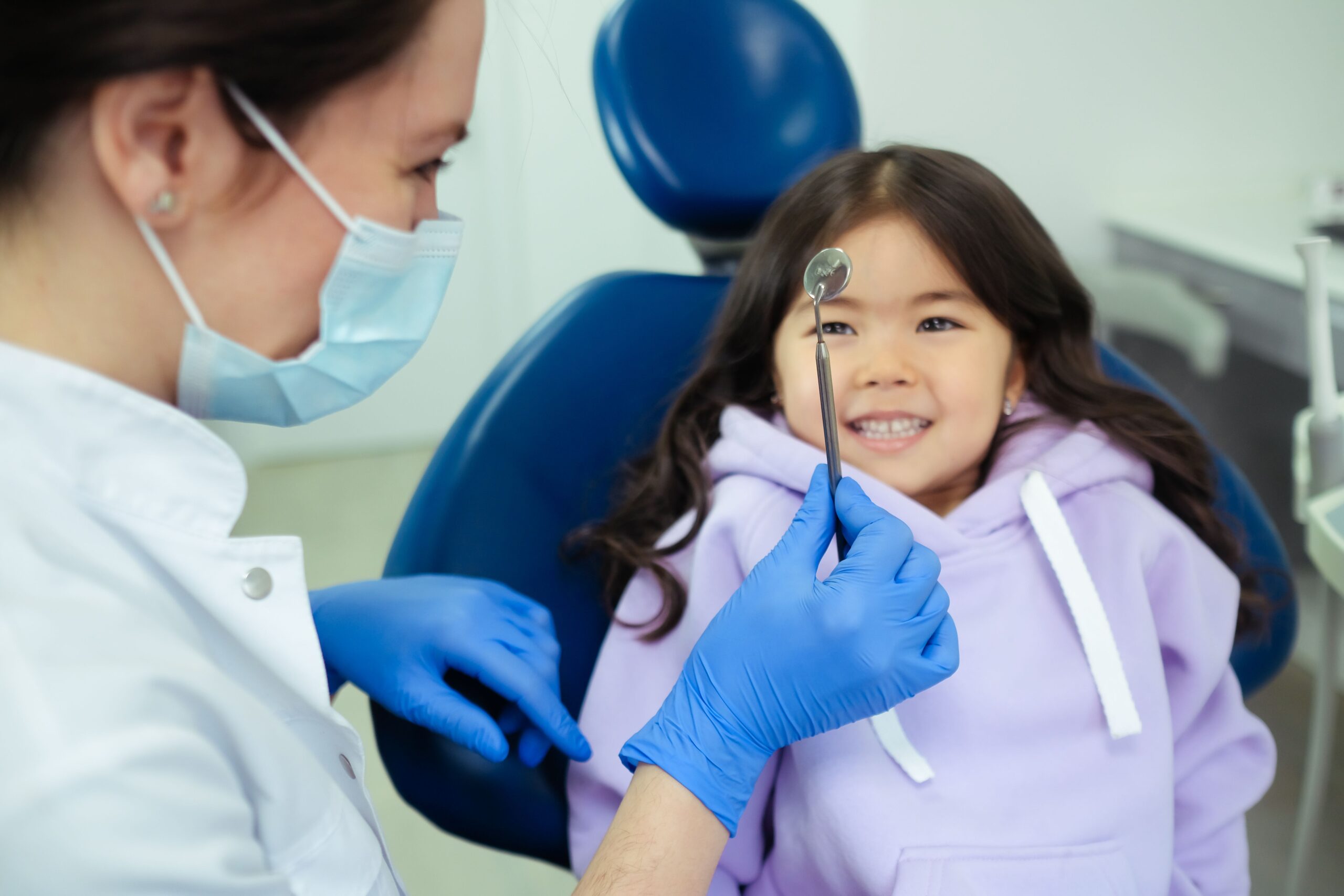
Growing Healthy Smiles at Tooth Sparkler
At Tooth Sparkler Family Dental in Frenchs Forest, our approach to children’s dentistry is prevention-focused.
We want to help children grow up with healthy teeth, good oral-health habits and positive experiences of dental care.
Orthodontic assessment forms part of that ongoing care.
Rather than waiting until all the adult teeth have erupted to look at the bite for the first time, we can monitor development throughout childhood and identify when something deserves closer attention.
The important message for parents is:
Early assessment doesn’t mean early treatment. It means having the information to intervene at the right time if treatment is needed.
And if a developing orthodontic problem is outside the scope of what we believe should be managed at Tooth Sparkler, we’ll discuss this with you and recommend referral to a specialist orthodontist.
If your child is due for their regular dental examination, or you’re concerned about how their adult teeth or bite are developing, book an appointment with our team.
Eligible children may be able to access preventive and general dental treatment through CDBS, with payment-plan options available for orthodontic treatment.
References and Further Reading
- Australian Dental Association. Teeth Straightening and Braces. Information about orthodontic assessment, tooth alignment and treatment.
- Orthodontics Australia. Orthodontic information and resources. Guidance about orthodontic assessment and specialist orthodontic care.
- Services Australia. What’s Covered by the Child Dental Benefits Schedule. Official information about covered and excluded dental services under CDBS.