At Tooth Sparkler, we see plenty of people in their 80s who are active, independent and very healthy. We also care for many people in their 90s, all at very different stages of health and independence.
Our oldest patient is 101!
And that illustrates one of the most important principles of geriatric dentistry:
Your age doesn’t determine your dental treatment. You do.
Two people who are both 90 can have completely different dental needs.
One may drive themselves to their appointment, exercise regularly, have excellent dexterity and comfortably undergo the same dental treatment they had twenty years earlier.
Another person of exactly the same age may be living with dementia, Parkinson’s disease, the effects of a stroke or significant frailty. They may take multiple medications, use a wheelchair, rely on others for their daily care or find conventional dental treatment difficult to tolerate.
Neither approach to dental care is more “correct”.
The treatment simply needs to suit the person.
Good dental care for older people is therefore less about chronological age and more about health, independence, function, treatment tolerance and what matters to the individual.
When the Goals of Dentistry Begin to Change
For a healthy, independent older person, there may be no reason to substantially change the goals of their dental care.
Prevention, restoring damaged teeth, maintaining healthy gums, replacing missing teeth and even cosmetic treatment may remain completely appropriate.
But as health and circumstances change, the goals of dentistry may need to change with them.
For some people, maintaining every tooth at all costs is no longer the most sensible objective.
Instead, the priorities may gradually become:
- staying free from dental pain and infection
- being able to eat and enjoy food
- maintaining useful, functional teeth
- keeping dentures comfortable
- managing dry mouth
- preventing broken teeth from becoming painful or sharp
- making daily oral care achievable
- minimising stressful or difficult procedures
- preserving comfort, dignity and quality of life.
Aesthetics may become less important for some people — but we should never assume that simply because somebody is older.
A 95-year-old can care just as much about their smile as a 25-year-old.
The question we should be asking isn’t:
“How old is this patient?”
It is:
“What is important to this person, and what dental care will genuinely improve their health, comfort and quality of life?”
Looking at the Whole Person, Not Just Their Teeth
This is where geriatric dentistry becomes very individual.
When planning treatment for an older person, we may need to consider their:
- General health. Are they medically well and independent, or are they living with several complex health conditions?
- Medications. Many older people take multiple medications, some of which can affect saliva, bleeding, healing and dental treatment.
- Mobility. Can they comfortably attend the dental practice and transfer into a dental chair?
- Dexterity. Can they still effectively brush and clean between their own teeth?
- Cognition and communication. Can they understand and participate in treatment decisions and tell us when something is uncomfortable?
- Tolerance of treatment. Can they comfortably manage a lengthy procedure, or would several shorter visits or a simpler approach be better?
- Support network. Are family members, carers or residential aged-care staff helping with appointments, healthcare decisions or daily oral hygiene?
- Access to care. Is physically getting to a dental practice becoming a barrier?
And importantly:
What does the patient actually want?
These factors often tell us far more about appropriate dental care than someone’s date of birth.
Australian data from the Australian Institute of Health and Welfare (AIHW) also highlights the additional oral-health and access challenges that can affect frail older people and people with complex healthcare needs.
Medical Conditions and Medications Matter
Geriatric dentistry is rarely just about examining a tooth and deciding how to fix it.
As we get older, the likelihood of managing several health conditions and medications increases.
Conditions such as cardiovascular disease, Parkinson’s disease, dementia, arthritis, diabetes, osteoporosis, stroke and respiratory disease can all influence how we plan and provide dental care.
Medications matter too.
Many older people take multiple medications — sometimes referred to as polypharmacy — and some can have significant effects on oral health.
One of the most common issues we encounter is dry mouth.
Saliva plays an enormously important role in protecting the teeth and soft tissues. When saliva quantity or quality is reduced, the risk of dental decay can increase significantly. Dry mouth can also make eating, swallowing, speaking and wearing dentures uncomfortable.
If you’d like to understand more about dry mouth and how changes in saliva can affect oral health, we’ve also discussed this in our guide to menopause and oral health.
Blood-thinning medications (anticoagulants and antiplatelet medicines), medications used to manage osteoporosis and many other treatments may also need to be considered when planning dental procedures.
The Australian Dental Association recognises that older Australians may have increasingly complex combinations of medical conditions, medications, oral disease, frailty and care dependency.
This is why we need to look beyond the individual tooth and understand the person attached to it.
Mobility and Access Can Become Major Barriers
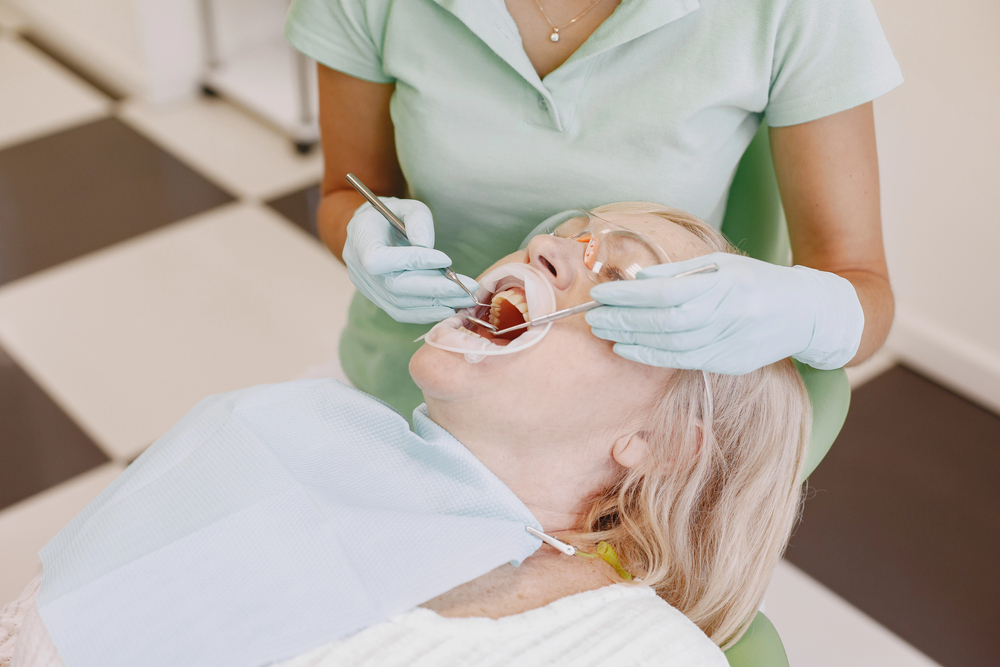
For someone who is frail, uses a wheelchair, has difficulty transferring or is living in residential aged care, simply getting to a dental surgery can become a major undertaking.
Transport may need to be organised. A family member or carer may need to take time away from work. Transferring into a conventional dental chair may be difficult or unsafe.
For some people, these barriers eventually mean that routine dental care stops altogether.
We don’t think reduced mobility should mean losing access to oral healthcare.
That is why Tooth Sparkler offers dental home visits and nursing-home dental care for people who find attending our Frenchs Forest practice difficult.
Our team can bring portable dental equipment into a person’s home or residential aged-care facility.
Depending on the circumstances, we can perform examinations and preventive care and use portable equipment, including dental X-rays, to help us understand what is happening.
Not everything can or should be performed outside a dental surgery.
But a surprising amount can be achieved.
Sometimes an examination, photographs, X-rays, preventive treatment and a carefully considered plan are enough to identify the important problems and decide what genuinely requires intervention.
Treatment Tolerance Matters
A treatment that is technically possible isn’t necessarily the right treatment for a particular patient.
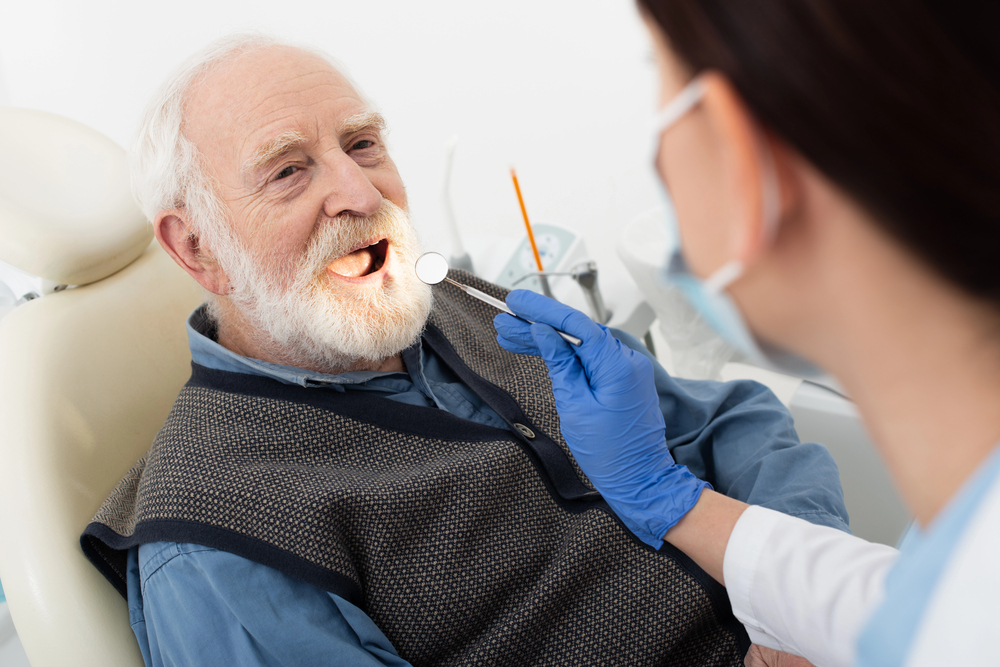
Someone living with dementia, Parkinson’s disease, significant frailty, anxiety or the effects of a previous stroke may find it difficult to remain in a dental chair for a long appointment.
They may have difficulty understanding instructions, keeping their mouth open, communicating discomfort or tolerating dental instruments.
Rather than forcing conventional dentistry into these situations, the dentistry needs to adapt to the patient.
That might mean:
- shorter appointments
- allowing additional time
- changing positioning
- involving a familiar family member or carer
- adapting how we communicate
- completing treatment in stages
- using minimally invasive techniques where appropriate
- choosing a simpler treatment option.
Sometimes our aim is not to make every tooth perfect.
Our aim may instead be to achieve the greatest improvement in comfort, function and health with the least burden on the patient.
Family Members and Carers Become Part of the Team
As someone becomes increasingly dependent on others, dental care often becomes a team effort.
Family members, enduring guardians, powers of attorney, nursing staff and carers may all have an important role.
They can help us understand changes in behaviour, eating or comfort that the patient may not be able to communicate themselves.
They may also help provide an accurate medical and medication history, organise appointments and transport, assist with decision-making where appropriate and, importantly, support daily oral care.
This becomes particularly important for someone living with cognitive impairment or dementia.
A person who cannot tell us “my tooth hurts” may instead:
- stop eating on one side
- refuse foods they previously enjoyed
- become distressed during oral care
- repeatedly touch their mouth or face
- develop difficulty wearing their dentures
- show an unexplained change in behaviour.
Good geriatric dental care means listening to the people who know the patient best while continuing to involve the patient themselves as much as possible.
Daily Oral Care Can Become Difficult
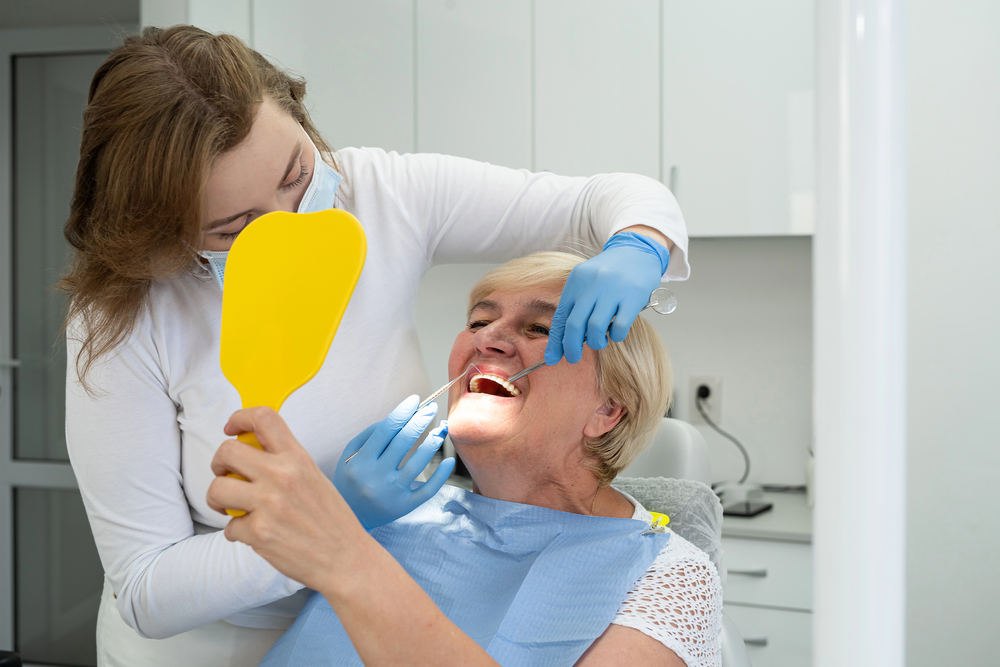
Something as simple as brushing your teeth requires a surprising combination of memory, coordination, vision and manual dexterity.
Arthritis, tremor, Parkinson’s disease, stroke, cognitive impairment and reduced mobility can all make oral hygiene increasingly difficult.
A person may still appear quite independent but gradually become less effective at cleaning their teeth.
Sometimes the answer isn’t a more complicated oral hygiene routine.
It is a simpler one that can actually be achieved.
This might mean adapting the toothbrush, using appropriate fluoride toothpaste, simplifying interdental cleaning, managing dry mouth or involving carers in daily oral hygiene.
Our guides to choosing the right toothbrush and choosing an appropriate toothpaste provide more information about these everyday oral-care choices.
The best oral-care routine is the one that is safe, effective and realistically achievable for that individual.
Prevention Becomes Even More Important
When someone has limited tolerance for dental treatment, preventing problems becomes incredibly valuable.
Depending on the individual, preventive care may include:
- Fluoride toothpaste appropriate to their level of dental decay risk.
- Professional fluoride treatments where indicated.
- Interdental cleaning where it is practical and achievable.
- Dry-mouth management to improve comfort and help protect vulnerable teeth.
- Dietary advice, particularly where frequent sugars or carbohydrate-containing supplements are contributing to dental disease.
- Regular dental review so problems can be identified while they are still relatively straightforward.
- Carer assistance when someone no longer has the dexterity or cognitive ability to clean their teeth effectively themselves.
For people living in residential aged care, carers may ultimately become responsible for much of this daily oral care.
The Australian Aged Care Quality and Safety Commission recognises oral health as an important component of overall health, wellbeing and quality of life for people living in residential aged care.
In some situations, minimally invasive treatments may also help us slow or arrest dental disease without putting the patient through lengthy restorative procedures.
You can also read more about fluoride and protecting teeth from decay and why preventive dental care can become particularly valuable when avoiding more complex treatment is a priority.
Sometimes Doing Less Is Better Dentistry
Modern dentistry gives us extraordinary treatment options.
But good dentistry isn’t about doing the most treatment possible.
It is about doing the right amount of treatment for the person in front of us.
For a medically complex or frail older person, replacing every worn filling or extensively restoring every compromised tooth may provide little meaningful benefit while creating a considerable treatment burden.
A more appropriate plan might focus on:
- treating pain or infection
- stabilising active dental disease
- smoothing a sharp or broken tooth
- protecting vulnerable teeth
- improving denture comfort
- preserving teeth that are important for eating
- making everyday oral care easier.
This isn’t ignoring dental disease.
It is person-centred dentistry.
We are balancing the potential benefits of treatment against the person’s health, wishes, comfort, function, prognosis and ability to tolerate care.
For one patient that may mean comprehensive restorative dentistry.
For another it might mean a much more conservative plan.
Both can represent excellent dental care.
Aesthetics Still Matter — If They Matter to You
It is easy to assume that appearance becomes unimportant as people get older.
That isn’t necessarily true.
Some older patients have very little interest in the appearance of their teeth. Their priorities are entirely about being comfortable and able to eat.
Others remain extremely conscious of their smile.
Neither is right or wrong.
We shouldn’t decide that a person’s appearance no longer matters simply because of their age.
Once again, the important question is:
What matters to you?
Inclusive Dentistry Means Finding a Way
There is no single approach to geriatric dentistry.
Some of our older patients walk into the practice independently. Others come with family members, carers, walking frames or wheelchairs.
Some need additional time.
Some communicate differently.
Some live with dementia or disability.
And for others, leaving their home or aged-care facility is extremely difficult.
Our role is to work out what is achievable and meaningful for each individual.
That may involve adapting the dental environment, working with family and carers, communicating with doctors and other health professionals, providing dental care at home or in an aged-care facility, or simply changing our expectations of what successful dental treatment looks like.
Because sometimes success doesn’t mean perfect teeth.
It can mean enjoying a meal without discomfort.
It can mean having a denture that doesn’t hurt.
It can mean being able to smile, speak and socialise comfortably.
It can mean maintaining independence for as long as possible.
And sometimes it simply means being free from dental pain.
Dental Care That Changes With You
At Tooth Sparkler Family Dental in Frenchs Forest, we don’t believe there should be a predetermined dental treatment plan based on someone’s age.
Whether you’re 70, 80, 90, or 101, we start with the person.
For our healthy, independent older patients, that may mean continuing the same preventive and restorative care they have always received.
When health, mobility or circumstances change, our approach can change too.
We can work with patients, families, carers, residential aged-care teams and other health professionals to develop dental care that is realistic, respectful and achievable.
The goal is to help people maintain their oral health, comfort, function, dignity and quality of life for as long as possible.
If you are caring for an older family member and are concerned about their teeth, dentures or oral comfort, particularly if attending a dental surgery has become difficult, contact us to discuss how we may be able to help.
Book an appointment or contact our Frenchs Forest team to discuss dental care at the practice or whether a home visit may be appropriate.
Australian References and Further Reading
- Australian Institute of Health and Welfare (AIHW). Oral health and dental care in Australia. Australian Government. The AIHW provides Australian information on oral health among older people and people with additional or specialised healthcare needs, including access barriers, complex medical needs and medication-related dry mouth.
- Australian Dental Association. Policy Statement 2.3 – Oral Health Access. The ADA discusses access to oral healthcare and the challenges associated with an ageing population, including frailty, care dependency, complex medical conditions and polypharmacy.
- Aged Care Quality and Safety Commission. Looking after your oral health in residential aged care. Australian Government. Guidance on oral health and its contribution to overall health, wellbeing and quality of life for people living in residential aged care.
- Australian Dental Association NSW. Oral health information for seniors. Information about oral health considerations for older Australians and maintaining access to appropriate dental care.